How Olivia Scaled Nursery Stickers to £1m in 18 months Part-Time
Most people looking to start a side business spend months perfecting their idea before launching. Olivia took a different approach. She bought cheap stickers from Temu, threw up a Shopify site in 30 minutes, ran a couple of Facebook ads with photos of her son's room, and started making profit from day one.
That scrappy start turned into Nursery Stickers, a UK-based DTC brand that's scaled to over a million pounds in revenue in just 18 months. All while Olivia continued working as a fractional CMO and raising three kids.
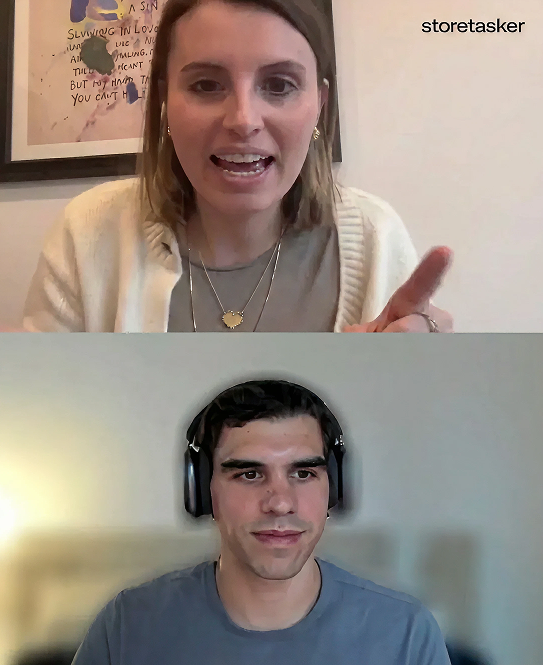
When we sat down to talk, I wanted to understand exactly how she pulled this off. Not the polished story, but the messy reality of shipping products from her living room, dealing with angry customers over terrible quality stickers, and the moment she decided to either commit to doing it right or shut it down.
Here's the unfiltered breakdown of how Olivia found the idea, validated it fast, scaled it systematically, and built a business that actually works around her life.
Finding the Idea Through Research, Not Inspiration
Tim: How did you come up with the idea for nursery stickers?
Olivia: Pretty random to be honest. My mom had a stroke just before my daughter was born and I had to take quite a bit of time off work. I was working full-time as a fractional CMO, which I still am now, and it hit me that there was nothing reliably bringing income if I had to take more time off.
I wanted something that could deliver predictable revenue. I knew I had it in me to build and scale a business because I'd worked across so many startups my whole career. I just needed to find the idea.
So I spent quite a lot of time researching. I would scroll through marketplaces like Etsy and Temu, look at search data, and I had quite a few different random ideas I was exploring.
The main reason nursery stickers started was it was just one trending product I saw at the time across Temu and Etsy. As a parent, I'd actually never even known this was a thing. So I ordered a couple of stickers and I was like, this is so cool. It just so happened that I was doing up my son's room at the time and they were so easy to use and looked amazing.
I was like, why are there no brands dominating this space? Am I missing something? So I did more research and realized there was quite a lot of search data behind it, but not many people knew about it. There was this opportunity of educating and building market awareness.
The takeaway: Olivia didn't wait for inspiration to strike. She actively researched trending products on marketplaces, cross-referenced with search data, and looked for products with demand but no dominant brand. The idea came from systematic research, not a lightbulb moment.
The 30-Minute Launch That Actually Worked
Tim: Was this your first try or did you test other ideas first?
Olivia: It was the second-ish. The first was a combination of other really random products, like photo frames to keep kids' artwork in and various other stuff. I ran ads behind all these things and nothing really worked except stickers.
I just bought a ton of stickers off Temu, super cheap. I put them on an ecommerce site, called it Nursery Stickers because it was done in about 30 minutes, and did a couple of ads with my son with some of the stickers I bought because we were doing up his room.
Literally from the moment I started running ads, it worked. People were buying, people were messaging, there was interest. I was like, hang on, people are actually into this. And from day one I was making a profit without having to do anything. I spent like £30 on stickers from Temu.
In my mind, that was it. I was just going to continue to buy and resell cheap stickers. That was the original intention. I was never going to tell anyone about it. I was just going to make some cash and have it running in the background.
Tim: How were you doing the shipping? Straight from China or from your home?
Olivia: I literally just bought them from Temu to my house. I didn't even test half of them. This is how it all went wrong at the beginning because the quality is horrendous from Temu. There's maybe one out of 10 that's okay. I just shipped them from my house.
The takeaway: Olivia didn't build the perfect business plan. She tested the core assumption fast: will people buy this product at this price with this messaging? The answer was yes within days, not months. Everything else could be figured out later.
The Marketing Skill That Made Fast Validation Possible
Tim: What's the main skill set required to get to that first step? Is this something others without paid marketing experience could figure out?
Olivia: I think the piece that has to be really good is the paid media side, the creative, the messaging, the whole proposition piece. Really messaging correctly to the customer is the main thing you have to get right.
You can do lots of testing, but the more experienced you are, the quicker you can shortcut a lot of mistakes. If you haven't got that instinct or experience, you're just going to burn through lots of cash trying lots of things.
I felt like I just went straight with the message that resonated with a piece of content because really it was one or two ads at the beginning and they worked from the get-go. One or two pieces of content that worked and I knew what a good ecommerce site looked like. I just built it from a Shopify template. I knew the core things that had to be in place.
I didn't have an Instagram, didn't have any organic, didn't have any reviews at the time. So it was literally just putting the pieces that I did have together that I knew would work.
The takeaway: Having marketing experience dramatically shortens the validation timeline. Olivia's background let her create effective ads and build a converting site immediately. If you don't have this skill, you either need to learn it, partner with someone who has it, or accept that validation will take longer and cost more.
The Quality Crisis That Almost Killed the Business
Tim: Take us through scaling from zero to over a million pounds. How did you get from here to there?
Olivia: I was basically just fulfilling from my front room with a bunch of Temu stickers. I didn't even test them. There was one particular sticker that I didn't even open up on Temu. It looked like a massive piece and actually the customer was getting a tiny sticker, but I was selling it as a massive piece. I was just taking the photography from Temu.
I realized quite quickly I needed to stop buying from there. Some things were working and I was starting to get positive reviews, but I was also getting a ton of really angry customers being like, what have you sold me? But what was working was outweighing what wasn't working, so I kept following it through.
Then it got to a point where I kind of made a conscious decision that I wanted to be prouder of what I was doing. I was still buying cheap products from China. 50% were happy with it, 50% weren't. I still wasn't proud to tell anyone what I was doing.
I was like, I actually would rather produce better stickers. It's clearly a market people are interested in, but I'm never going to grow this thing if the quality is meh. Either I commit to doing a meh business that won't scale, won't get great reviews, or I need to change course.
The takeaway: There's a point where you have to decide if you're building a real business or just extracting quick cash. Olivia could have kept reselling cheap products indefinitely, but she knew it would never scale beyond a certain point without fixing quality.
The Pivot to UK Manufacturing
Olivia: I found UK printing facilities and basically pivoted to all my own designs. I took what was working, had them redesigned better with designers, and started printing in the UK.
At that point I had to stop fulfilling from my front room because we were selling over a thousand orders a month. I found a 3PL to do all of that, which really helped me get some headspace. My house was so cluttered it was crazy.
The minute we started producing our own stickers in the UK, everything changed because I became prouder of the product. It was costing me more, so I knew I had to change how I was acquiring customers. I couldn't rely solely on a few meta ads on Facebook.
I invested a lot of time in getting the creatives better, diversifying our channel mix so we had a good proportion coming from organic, and all the other pieces of the puzzle that needed to make it work.
Tim: How much of an impact was it to move from manufacturing in China to the UK? Did it kill your profit margin?
Olivia: I increased prices and it didn't impact really at all. There was obviously a margin impact, but we overcame that by doing smaller stickers that are cheaper to produce but still have the same impact. Our product is much higher quality so we can justify the pricing.
Moving to a 3PL really didn't change things from a price perspective, very marginally. Working with a 3PL you have access to much more competitive courier prices and packaging prices. The investment in storage fees and management fees was marginal at the scale I'm doing now.
The takeaway: Better quality doesn't always mean worse margins if you adjust your product mix and pricing strategy. Olivia maintained profitability by redesigning products to be cheaper to produce while still delivering the customer outcome, then justified higher prices with better quality.
Building a Part-Time Business With Full Outsourcing
Tim: You're a working mom with three kids doing fractional CMO work. What have you outsourced and what do you still control?
Olivia: I've outsourced customer service and social. 90% of our creative output I've outsourced. I have somebody running all of our paid media, but really all I'm doing is managing it.
I'm still owning any new manufacturing piece, working with our printer, designs, everything. And I'm still guiding everything that's happening, but I have really great people I can trust doing all the execution.
The takeaway: Olivia's not trying to do everything. She owns the strategy and the core decisions around product, but execution is handled by trusted partners. This is how you build a million pound business part-time.
The Accidental Success of Etsy
Tim: You mentioned Etsy. How important is it as part of your mix?
Olivia: Etsy has kind of grown by accident. I wasn't convinced it was going to work for us because it's extremely crowded. I did research at the beginning and there were tens of thousands of listings in our space.
I decided to list on Etsy for a couple of reasons. It's much easier to ship to the EU when you're selling on Etsy because there are various things in place we wouldn't have to get as a brand. So it meant I could serve a different customer in a different location. We've also seen a lot of traction in the US by accident.
I listed just the best products, the stuff I knew would generate positive reviews, because I'd heard that reviews are the driving force behind Etsy succeeding. It just naturally, organically, slowly grew and in the last three months it's really grown. Now it's a significant proportion of our monthly revenue, supporting organic.
We pay nothing to be on the platform other than commissions. There's no advertising spend, nothing. If you can cut through the competition and Etsy prioritizes you, there is so much scope for growth. We're showing top for a lot of our stickers on the top page of Etsy and that's all you need.
The takeaway: Etsy isn't dead if you have the right product and can rank organically. Focus on getting reviews fast by listing only your best products first. Once Etsy's algorithm picks you up, you get distribution without ad spend.
The TikTok Shop Opportunity Nobody's Maximizing
Tim: Are you investing in TikTok Shop and what's that journey been like?
Olivia: We've done a little bit on TikTok Shop. Started it maybe six months ago. I just set up TikTok myself, set up TikTok Shop which was a minefield, and started posting a little bit.
Weirdly it's working but we're doing nothing. We're generating orders every single day from TikTok Shop and it's all on the back of three reels that went semi-viral. There's tons of opportunity. I feel like I've got my head around the key ingredients for TikTok Shop. Now it's just about putting everything in place to make it work.
The takeaway: TikTok Shop is still underutilized. Olivia's getting daily orders from three videos. Most brands haven't figured it out yet, which means there's massive opportunity if you're willing to learn the platform.
The One Skill That Drives Everything
Tim: If you had to attribute your success to one skill, what would it be?
Olivia: I feel like it really helps that I'm the end customer because we're selling products to parents. But I think the magic sauce is really knowing what's going to resonate with parents and being able to cut through the noise and deliver a product and solution to a problem really well.
That's what's helped us grow so quickly. We have amazing content. We know what works. We're evolving and developing our product mix to serve what our customers are asking for.
We're ruthless with getting rid of products that don't work. And we're equally ruthless with going as fast as possible with things we think are going to work.
The takeaway: Being your own customer is a massive advantage, but the real skill is knowing how to message to that customer and cut through noise. Then ruthlessly double down on what works and kill what doesn't.
The Roadmap for 2026
Tim: Where do you think this will go in 2026?
Olivia: There's so much growth at the moment. I doubled the business by looking at IKEA hack stickers. We're doing wall panels. I'm going to be doing lots more innovative product lines, some of which aren't limited to baby rooms. Stickers that can grow with the child and also work in general living spaces.
We're going to try all of our product lines in the US because we've seen traction on Etsy and our 3PL has presence there. We're going to try Amazon as well. There's a lot of growth opportunities from Nursery Stickers.
I do have a goal by Q4 this year to have launched a second product under a different brand targeting the same audience. The whole idea was to have a portfolio of brands in the parenting space that could potentially speak to each other.
The takeaway: Once you have one successful product, expansion is about identifying adjacent opportunities in the same customer base. Olivia's building a portfolio of parenting brands, not just one product line.
The Action Plan: How to Replicate This
If you want to follow Olivia's playbook, here's what to do:
1. Research systematically, not randomly. Scroll marketplaces like Etsy, Temu, and Amazon. Look for trending products with search volume but no dominant brand. Cross-reference with Google Trends and keyword tools.
2. Test the core assumption fast. Don't perfect anything. Buy or source the product cheaply, throw up a basic Shopify site, run some ads, and see if people buy. You need to know within days if the fundamental idea works.
3. Start with your strengths. If you're good at paid ads like Olivia, lean on that. If you're not, partner with someone who is or accept you'll spend more time and money validating.
4. Accept that quality will be bad at first. Olivia shipped terrible products from Temu knowing half her customers would be unhappy. That's fine for validation. Just don't stay there forever.
5. Make the quality decision consciously. At some point, decide: am I building a real business or just extracting quick cash? If it's a real business, invest in quality even if margins take a temporary hit.
6. Outsource execution, own strategy. You can't do everything part-time. Hire for customer service, fulfillment, creative, and media buying. You own product decisions and strategic direction.
7. List on every platform that makes sense. Etsy, Amazon, TikTok Shop. Don't overthink it. Get your best products listed, focus on reviews, and let the platforms' algorithms do distribution work for you.
8. Be ruthless with your product mix. Kill what doesn't work immediately. Double down on winners fast. Don't let sentiment or sunk cost keep dead products around.
9. Solve for your target customer relentlessly. If you're your own customer, even better. But either way, your job is knowing what resonates and delivering that better than anyone else.
The reality is that most people overcomplicate starting a business. They wait for the perfect idea, the perfect product, the perfect moment. Olivia bought £30 worth of stickers and launched in 30 minutes. Eighteen months later, she's doing seven figures.
The difference isn't luck. It's systematic research to find demand, fast testing to validate, and ruthless focus on what works once you find it.
Want help launching or scaling your DTC brand? Connect with Storetasker's ecommerce experts who specialize in turning ideas into profitable businesses and start your project today.


Shopify Expert?


.svg)

.svg)
